
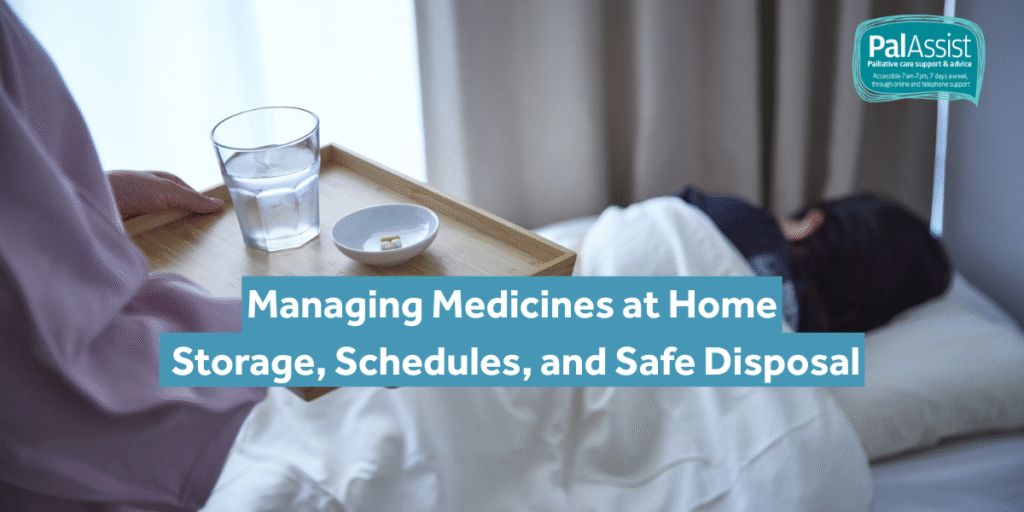
Have you ever stared at a collection of medicine bottles and felt completely overwhelmed? It’s pretty common for families to feel this way when they’re caring for someone at home.
When someone you love needs palliative care at home, managing their medications can feel like learning a new language. Between dosing schedules, storage rules, and knowing what to do with leftover medicines, it’s a lot to juggle.
We understand how stressful this can be. That’s why PalAssist is available 7 days a week (7 am to 7 pm) to help you manage medicines for palliative care.
In this guide, we’ll walk you through:
- Storing medications safely at home
- How to keep track of dosing schedules
- Safe disposal of unused or expired medicines
- When to reach out for healthcare support
You’ll find practical tips that make medication management less stressful and more manageable. Let’s get started.
Secure Storage for Home Medicines
You need a safe place to keep medications where they’re protected but still easy to reach when needed. The reason is that improper storage can lead to serious accidents or medicines that simply stop working.
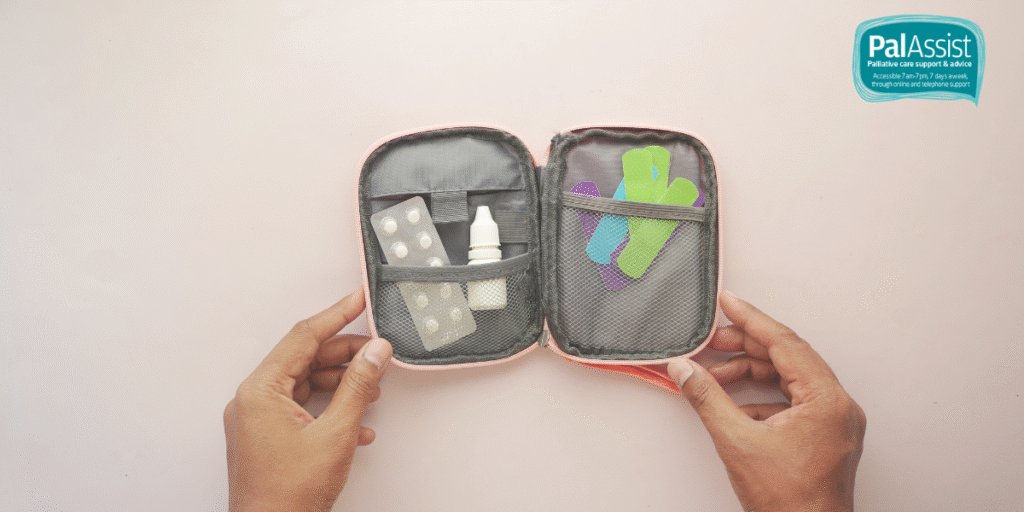
The right storage setup protects everyone in your home while making sure medicines stay effective.
Here’s what you need to know about keeping your medicines secure and organised.
Why Medication Security is Vital
Medication security is vital for keeping your loved one safe, protecting others in the household, and preserving the quality of each medicine. The consequences of careless storage go beyond just misplaced bottles.
Often, home medicines for palliative care include strong pain relief and nausea medications that need careful handling. So if you don’t take storage seriously, poor storage can lead to:
- Children or pets accidentally accessing medicines
- Medications are losing effectiveness due to heat or moisture
- Confusion about which medicine is which
- Expired doses sitting alongside current ones
When you’re not careful with proper security, you risk someone taking the wrong dose or medicine that’s past its use-by date. Trust us, this can ruin pain management plans or make nausea symptoms worse when your loved one needs relief most.
Practical Steps for Organising Storage
Effective secure storage requires a commitment to specific placement, temperature, and personal storage practices. That means choosing locations thoughtfully and sticking to a system that works for your household.
For the best results with your medicines, follow these steps:
- Keep all medicines in the original packaging with labels intact
- Store them in a locked cabinet or high shelf away from children
- Choose a cool, dry spot away from bathrooms and kitchens
- Create a dedicated space for easy access during urgent moments
Useful Tip: Follow your prescribers’ instructions for temperature, especially for refrigerated storage options. Some medicines lose their strength if they get too warm, so check the label whenever you’re unsure.
Now that you’ve got a secure storage system sorted, let’s look at how to keep track of when each medicine should be given.
Organising and Tracking Administration Schedules
Are you worried about missing a dose or giving the wrong amount at the wrong time?
We understand that keeping up with multiple medications throughout the day is not easy. But believe us when we say that a simple system can take away much of that anxiety and help you feel more in control.

In this section, we’re going to show you how to create a schedule that works for your family and keeps everything running smoothly.
Daily Scheduling and Dosage Accuracy
Palliative care involves many drugs, so a good tracking process ensures you give the right amount at the right time. For example, pain medications often need precise timing to prevent breakthrough discomfort, while nausea medicines work best when taken before symptoms get too strong.
So when you stick to giving medicines at the right time every day, you prevent symptoms from building up. At the same time, clear instructions and support reduce stress for you and help maintain accurate dosing for patients.
Managing ‘As Needed’ Breakthrough Doses
Beyond the standard timetable, understanding how to handle ‘as-needed’ medicines is necessary for crisis moments.
The as-needed medicines are extra doses you can give between regular scheduled times when symptoms flare up unexpectedly. They give you urgent symptom relief for sudden acute pain like severe breathlessness or sharp discomfort when regular doses aren’t enough.
That’s why you need to keep these medicines in a dedicated storage unit that’s separate from your daily stock but still within reach. The reality is that the terminal phase can be difficult, and symptoms change quickly, so you’ll want to access these doses without delay.
In our experience, writing down when you use these medications helps your doctor or nurse adjust the overall palliative care plan. They can spot patterns and make changes that prevent future crises before they happen.
Easy Home Organisation Systems
What’s the easiest way to stay on top of everything without feeling overwhelmed by medicines scattered everywhere? Well, the answer is finding a storage system that fits your daily routine and sticks with it.
Here are some practical options that work well for home-based palliative patients:
- Paper charts or diaries hung in a visible spot near personal storage
- Phone apps with reminder alerts for each dose
- Weekly pill boxes with separate units for morning, afternoon, and evening
The result you get from using these systems is knowing exactly what’s been given and what’s still needed, plus making fewer mistakes.
Since you’ve now got storage and schedules sorted, it’s time to learn about safely getting rid of medicines you no longer need.
Safe Disposal of Unused Palliative Medications
Once your loved one no longer needs certain medicines, you can’t just toss them in the bin or flush them down the toilet.
If you throw medicines in regular rubbish or pour them down the drain, you’ll face risks of kids or pets finding them and poisoning your local water supply. For this reason, you need to follow proper disposal methods to protect your family and the environment.
Let’s look at how to do this properly and where you can get help.
Understanding National Disposal Guidelines and Risks
Australia’s Therapeutic Goods Administration recommends taking all unwanted medicines to your local community pharmacy for free disposal through the Return Unwanted Medicines (RUM) program. This includes prescription medicines, over-the-counter products, and controlled drugs used for pain relief in palliative care.
The reason these guidelines exist is to protect your community from accidental poisoning and prevent medicines from ending up in the wrong hands.
When a person passes away or no longer needs certain medications, leftover supplies create security risks if not handled properly. Even medicines in their original packaging need proper checking because some require special handling due to their strength.
Though the disposal process varies depending on the type of medicine, ask your pharmacist or healthcare team for specific advice about what you have at home.
Helpful Tip: Return unused controlled drugs to your pharmacy as soon as possible to remove this risk from your home.
Utilising Medication Return and Take-Back Schemes
Most pharmacies across Australia offer free medicine return services where you can drop off anything you no longer need. This is the safest and most convenient way to get rid of old medicines without putting your community at risk.
Here’s how you can use these schemes:
- Take unused medicines in their original boxes to your local pharmacy
- Ask about disposal boxes available at some storage facilities and health centres
- Check if your pharmacy offers a collection service for customers who can’t travel
If a medicine is not working for your patient or the dose has changed, return it immediately so it doesn’t clutter up your storage space and confuse your medication routine.
There’s no reason to hang onto bottles “just in case” when they’re taking up room and creating unnecessary risk. Plus, you won’t get any money back for keeping them around.
Get the Support You Need with PalAssist
Many of us find managing medicines for palliative care confusing and stressful. The challenges around safe storage, tracking doses, and proper disposal are difficult to handle alone. But when you follow some clear steps and use the right resources, you can take control.
We’ve covered how to store medicines safely, track doses accurately, handle breakthrough pain, stay organised, and dispose of unwanted medications properly. These strategies help you stay organised and keep your loved one comfortable.
When you’re ready to talk through your medication concerns or need guidance on palliative care at home, we’ll be happy to help you.